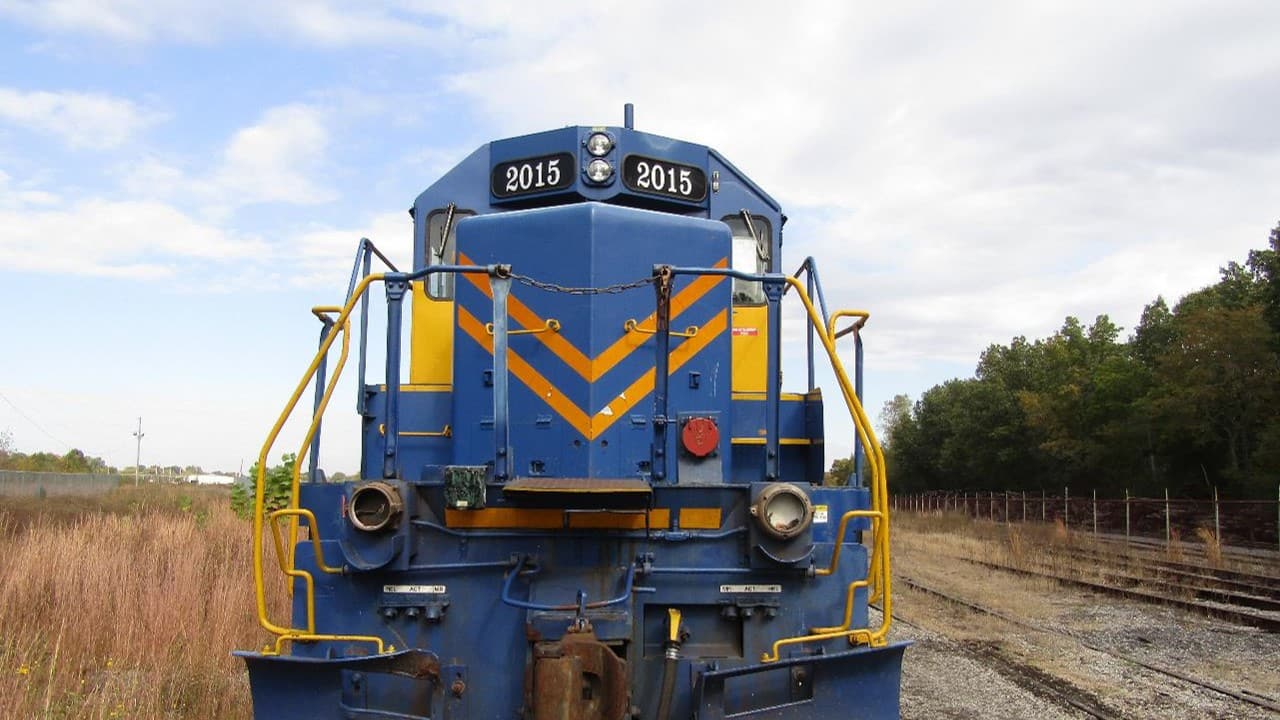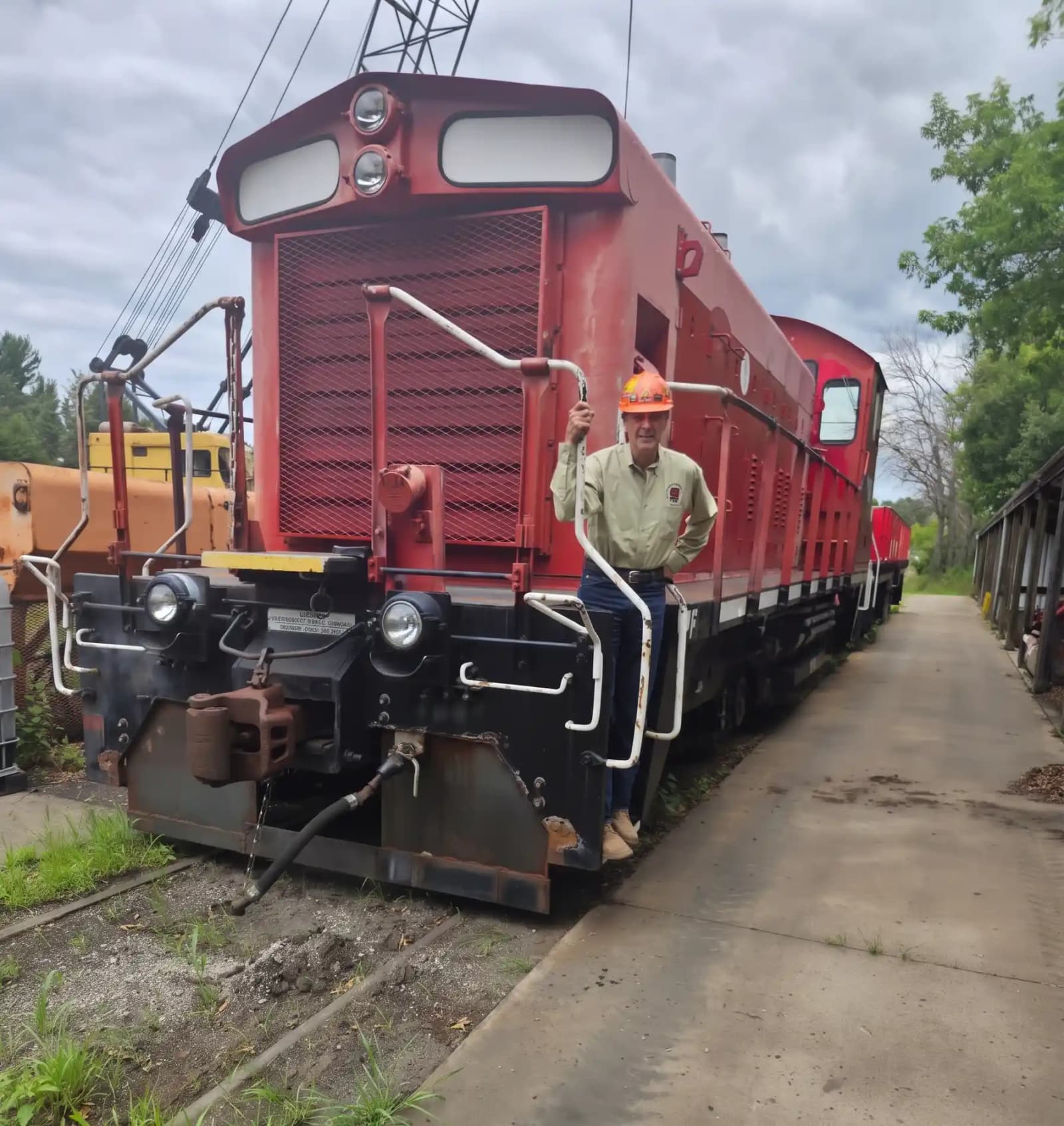
A used diesel locomotive can give decades of service when it is matched to the work and bought with eyes open. It can also become an expensive lawn ornament. The difference is almost always decided before the bill of sale is signed.
This guide walks through how we look at a unit when a customer asks us to find one, and the questions worth asking any seller.
Start with the job, not the listing
Before comparing locomotives, write down what the unit has to do:
- What it pulls. How many cars per move, loaded or empty, and the heaviest cut you expect to handle.
- Where it runs. Grades, curve radius, the condition and weight rating of your track, and any bridges or scales the unit has to cross.
- How often it works. A unit that spots a few cars twice a week has very different needs from one that switches a busy yard every shift.
- Who runs it. Operating with a crew on board, or with a remote control system, changes which units make sense.
Those answers narrow the field quickly. Grade alone is a big one: every 1% of grade adds roughly 20 pounds of resistance for every ton being moved, so a train that rolls easily on level track can stall a light unit on a modest incline.
Switcher or road unit
Most buyers end up choosing between two broad families.
Yard and industrial switchers are built to work at low speed with good visibility and tight curves. They range from small industrial units like the GE 25-ton to 45-ton family up through 80-ton GE units and EMD switchers such as the SW1200, SW1500 and MP15. We go deeper on sizing them in our guide to switcher locomotives for sale.
Road switchers such as the EMD GP9 or SD40-2 carry more horsepower and weight, and are the usual choice for short lines and heavier industrial service. Four-axle units like the GP series are more forgiving on lighter track and tighter curves. Six-axle units like the SD40-2 spread their weight over more axles and put down more tractive effort, which helps on grades and with heavy trains.
If you are not sure which family fits, describe the work to us and we will tell you honestly what we would run.
The mechanical inspection
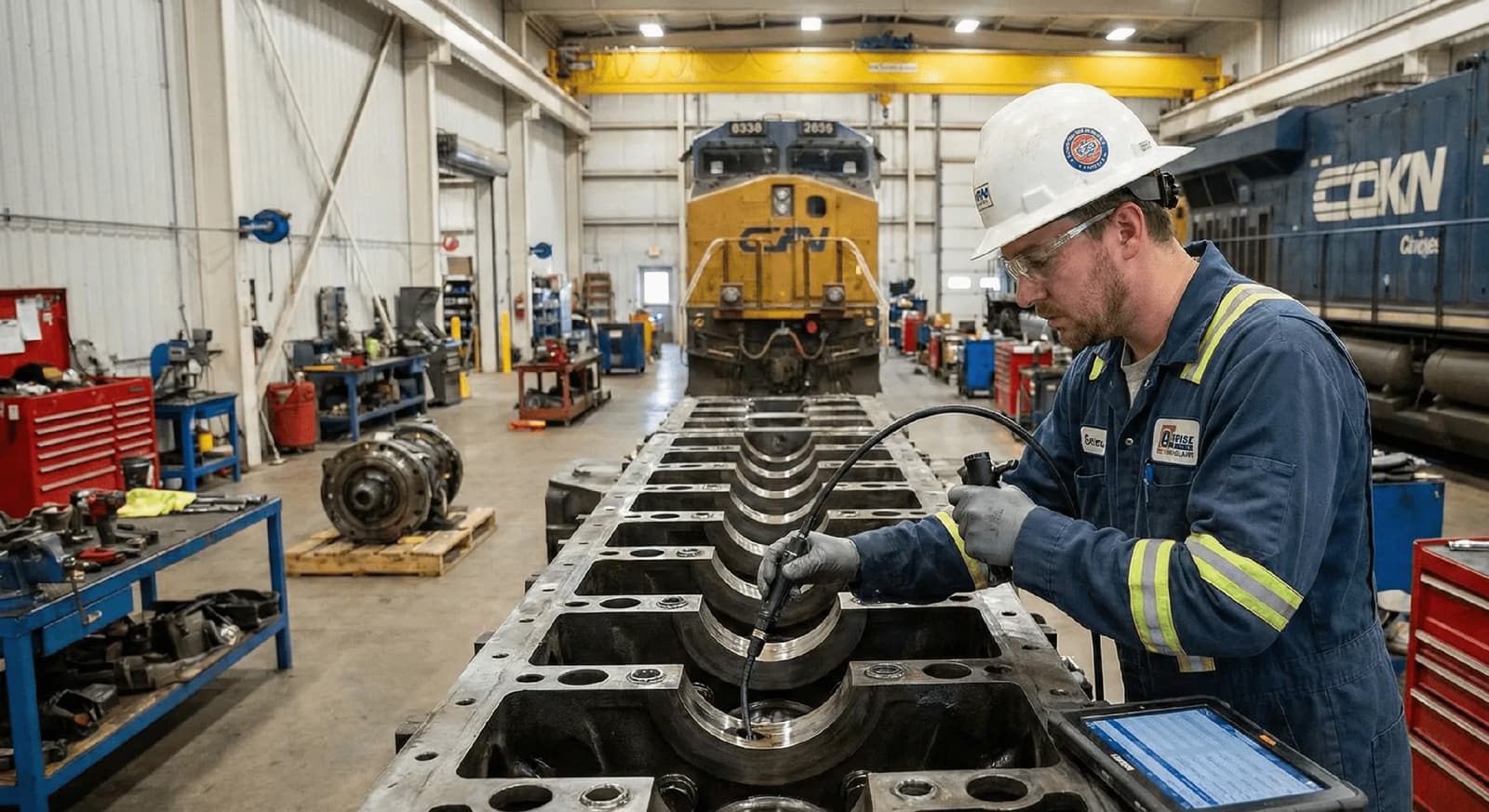
Every unit we list is inspected before it goes up for sale. Whoever you buy from, these are the areas that matter most.
Prime mover
The diesel engine is the heart of the unit and the most expensive thing to fix. Ask for oil analysis results, look for coolant in the oil or oil in the coolant, check crankcase pressure and listen for knocks or blow-by. A load test, either on the unit’s own self-load feature or on a load box, tells you far more than an idle run in the yard.
Generator and traction motors
The main generator (or alternator) and traction motors turn engine power into tractive effort. Insulation tests on the motors and generator are worth asking for. Motor type matters for parts and performance; our current GP9, for example, rides on D77 traction motors, a common and well supported EMD design.
Trucks, wheels and running gear
Look at wheel flanges and treads, bearings, springs, brake rigging and the condition of the truck frames. Wheel wear and flange condition have legal limits, and replacing wheel sets is costly, so this is not a place to guess.
Air brakes and compressor
Confirm the brake schedule (the GP9 we have listed uses 26L), that the compressor builds pressure in a reasonable time, and that the system holds pressure without leaking. Cracked hoses and tired valves are common on units that have sat.
Cab, electrical and the walk-around
Gauges, lights, horn, bell, sanders, controls and wiring all deserve a look. Fuel, oil and coolant leaks under the unit tell their own story about how it has been kept.
Paperwork and FRA status
Ask what records come with the unit. Locomotives operated on the general railroad system need periodic inspections under federal rules, with the most recent 92-day inspection recorded on the cab card (FRA Form F6180-49A, often called the blue card), plus records of the annual and other required tests. A unit that has been out of service may need those brought current before it can run.
If the locomotive will interchange with other railroads, it also needs proper reporting marks and registration. Equipment that stays on a private industrial track can have different requirements, so tell your seller where the unit will operate.
At a minimum you should receive a clean bill of sale and clear title. Ask about liens, especially on units coming out of a fleet.
Budget for more than the price
The purchase price is only part of the cost. Plan for:
- Transport. Moving a locomotive by rail, by heavy-haul truck, or by ship involves permits, cranes and insurance. We coordinate all of it, from interchange points to deep-water ports.
- First service. Fresh filters, fluids and a full going-over before the unit enters service is cheap insurance.
- Upgrades. Remote control systems or improved filtration can lower operating costs and make a unit safer to run.
- Insurance and training for whoever will operate it.
For a closer look at what drives price, see how much a used diesel locomotive costs.
Questions to ask any seller
- When was the last major engine work, and can I see the records?
- Can the unit be load tested before purchase?
- What is its current FRA inspection status?
- Has it been in regular service, or sitting? For how long?
- What comes with it: spare parts, manuals, remote control equipment?
- Who handles loading and transport, and what does it cost?
Buying from Diesel Locomotive Co.
We have been selling and leasing motive power for more than 30 years, and every unit we list is assessed by rail mechanics before it goes up for sale. We do not list scrap. If you do not see what you need in our current inventory, tell us what you are looking for. We often have buyers and sellers waiting on specific units, so a quick conversation can turn up options that are not listed yet.